

Outside of My Body, Inside the Disco
A video sculpture showing the ephemeral nature of how the mind views the body, and how the space and stimulus around us manifests in our perceptions of self
While the physical form of our body changes relatively gradually and slowly, our minds can change in a moment. Some of these animations show how our surroundings permeate our views of ourselves, we may see ourselves reflected in our breakfasts, in the media, in a glass of wine, the shape of an old fashioned camera. We cannot separate our minds from the stimulus that exists around us.
Outside My Body, Inside the Disco, 2024
Plywood, acrylic paint, portable monitors, Raspberry Pi’s, hand-drawn animations made in Adobe Animate and Procreate.
This piece has been shown at Currents New Media Festival, NYC Resistor, and NYU’s ITP Spring Show 2024. Below is documentation of the project on display at Currents.
Inspiration
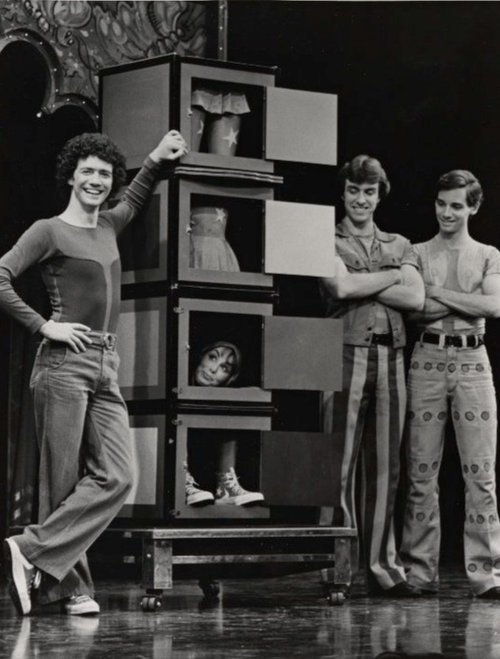
Aesthetically inspired by “zig-zag woman” and “woman sawed in half” magic tricks. I was conceptually inspired by the Mind Body Problem in philosophy.

I used the shape of my own body to explore the ways we dissect our bodies and how our intangible minds mingle with our physical bodies.

After determining the shape and placement of the displays, I mapped the animations to the dimensions of the body frame.
PROCESS
Cutting out the form
There was no CNC machine wide enough to accomplish the life-size scale I wanted, so I used the Shaper Origin, a hand-held CNC. The process was quite tedious and physically demanding.
The Shaper Origin works in 2.5D. I cut my project to be three layers, so I could do more precise pockets. The two back pieces that hold the electronics were glued together to make one single back, while the front piece which holds the screen remains easily detachable for install and debugging.

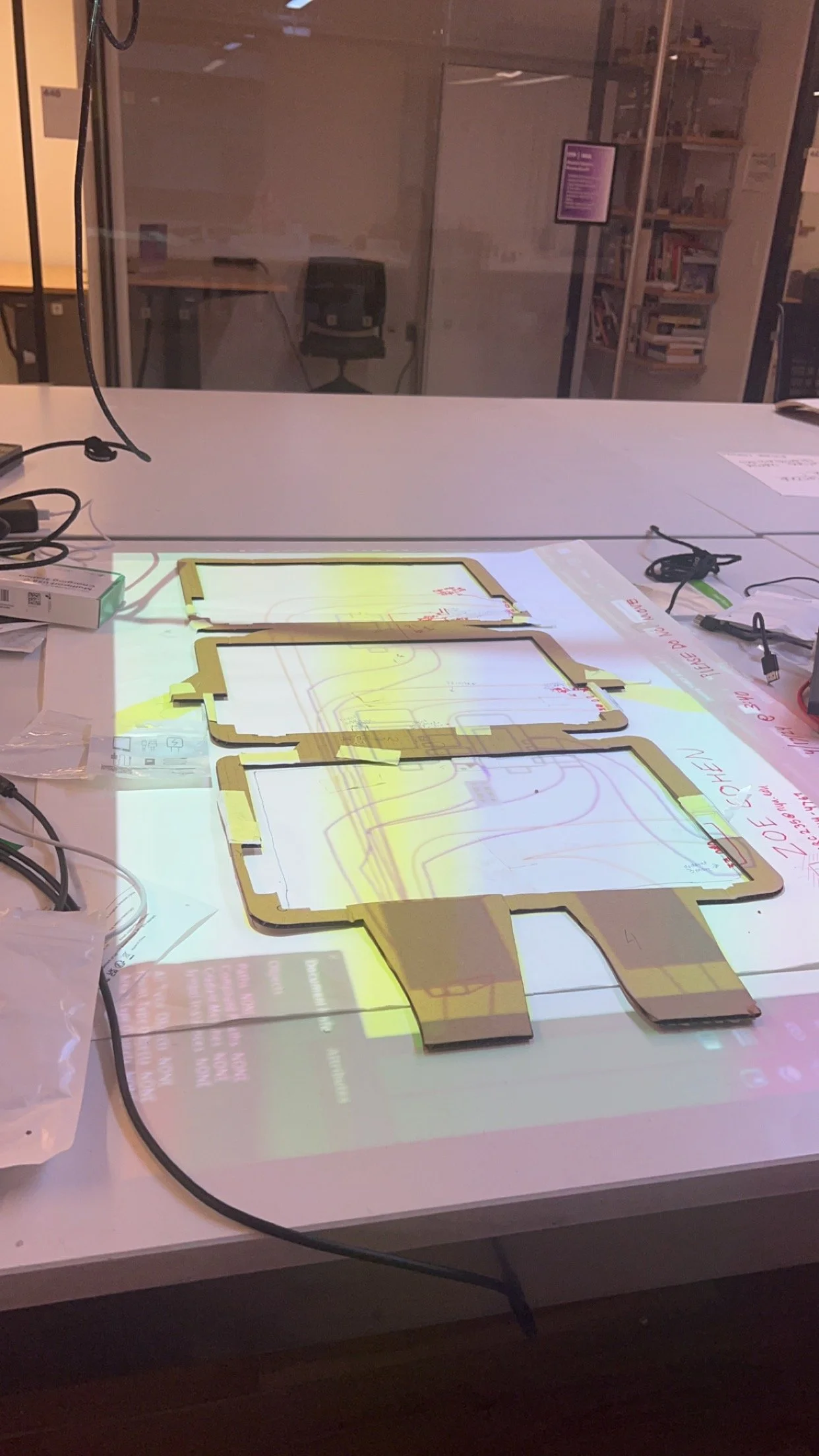

Using projection to map out cable + rasp pi placement at full scale

I used 16:10 screens because that was closer to the aspect ratio of an iPad Pro, the screen I used in the original iteration, also because the content of each screen was not well suited for something as extreme as a 16:9. This choice proved to add many complications to the project, as normal media players were not compatible with a 16:10 screen. The only device that would play video edge-to-edge on a 16:10 screen was a Raspberry Pi, so I learned how to program my own OS on a Raspberry Pi.
Installing pis, cables, and displays inside the body
This is the second iteration of this project.
To see documentation for the prototype, click here.